
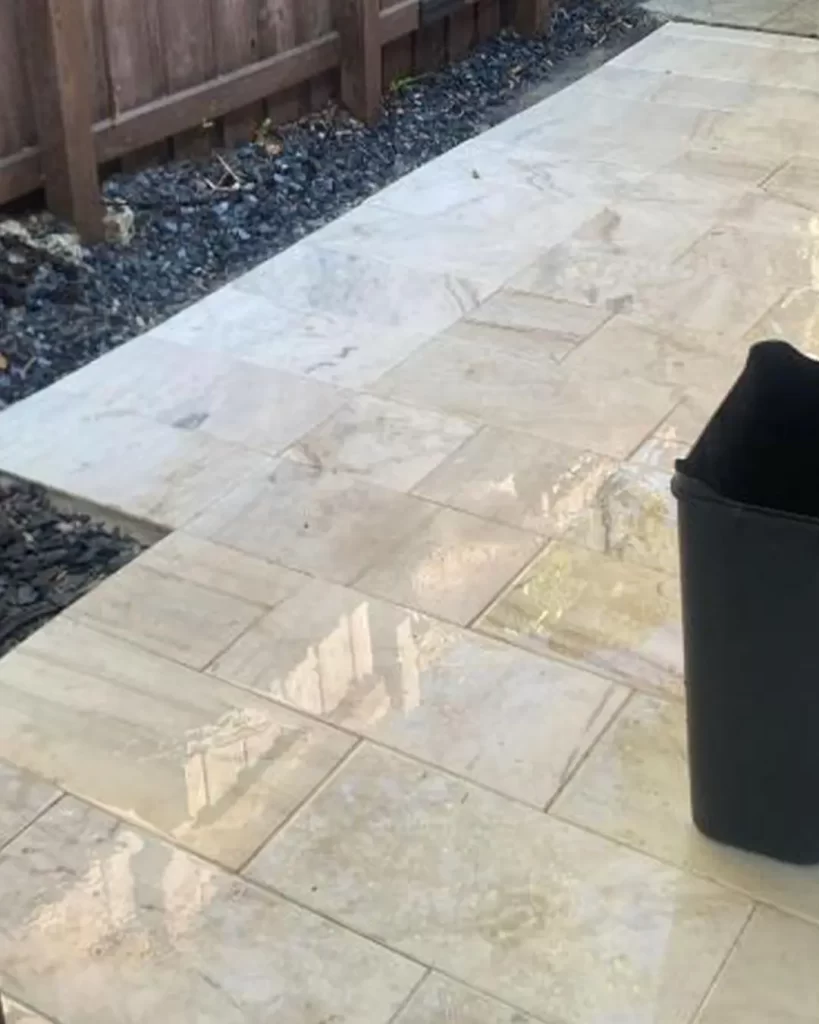
People often lump travertine and marble together as “natural stone,” and around a Boca Raton pool both can look equally elegant. Once sun, water, pool chemistry and bare feet go to work on them, though, they behave differently. If your home has either stone, understanding those differences is the first step toward travertine cleaning and sealing Boca Raton homeowners can rely on, and toward marble care that protects a serious investment.
Our team has worked on exterior surfaces across South Florida for more than 21 years. On every natural stone job, one lesson holds: the stone decides the method, not the other way around.
Two Natural Stones, Two Different Personalities
Marble and travertine are both porous natural stones, not ordinary concrete. Both need products and methods chosen for the specific stone, because the wrong cleaner or sealer can affect how they look and perform. Beyond that shared foundation, they tend to differ in ways that matter for cleaning and sealing.
Travertine: texture, pores and natural voids
Travertine typically has a more open, textured structure, with natural pits and holes that may be filled or left open depending on how the stone was finished. Many homeowners choose tumbled or textured travertine around the pool because it feels comfortable underfoot and looks relaxed and warm.
That texture is part of its charm, but it also gives dirt, organic growth and pool water more places to settle. Cleaning travertine is about reaching into the surface and its pores without eroding the stone or the joints. Sealing it is about reducing how much water and staining material the stone takes in.
Marble: a finish that shows everything
Marble is often installed with a smoother, more refined finish, and that finish is a big part of what owners pay for. Because of this, marble tends to show dullness, etching and staining more visibly than textured travertine.
A mistake that might go unnoticed on a tumbled travertine paver can stand out clearly on a marble pool deck. Marble care leans heavily on gentle, stone-appropriate products and careful technique, so the stone is cleaned and protected while the look you chose is preserved.
Why South Florida Is Hard on Both Stones
Boca Raton pool decks live in a demanding environment. A National Weather Service Miami study of long-term records found that about 69 percent of South Florida’s annual rain falls during the roughly five-month rainy season. That means months of soaking, drying and soaking again.
Add strong sun, salty air for homes near the ocean and the Intracoastal Waterway, splash-out from pool water, and leaves or pods dropping from mature trees. Each of these leaves something behind on porous stone. Over time, that can show up as dark organic staining, a dull or chalky look, or discoloration that ordinary rinsing does not fix.
The drier season that follows brings lower humidity and less frequent rain. For many homeowners, that makes late fall and winter a practical window to restore stone before the busiest months of entertaining.
Travertine Cleaning and Sealing in Boca Raton: A Process That Protects the Stone
A good result starts long before any sealer is opened. Proper preparation is the foundation of lasting results, and clean is not the same as protected. Here is how our team typically approaches a travertine pool deck, adjusted to what we find on site.
- Evaluate the stone and its history. We look at the finish, the condition of the joints, any existing sealer and the types of staining present. Prior treatments change what is safe and what is realistic.
- Clean with the right pressure and technique. We use hot water, high-pressure cleaning equipment, but pressure and technique are matched to the surface. Travertine should not be treated the way a plain concrete slab might be.
- Treat problem areas separately. Organic stains, rust or other marks may need targeted treatment. Results depend on the stain, the stone, its age and prior treatments, so we evaluate before promising anything.
- Strip failing sealer when needed. If an old sealer is cloudy, peeling or incompatible, it has to be chemically stripped. Pressure washing removes surface dirt and organic buildup, but it does not remove sealer that has bonded to the stone.
- Seal with a product suited to the stone and the setting. Where it is the right fit, we use a premium two-part urethane sealer, and we rarely use or recommend solvent-based (xylene) sealers. In the right application, a quality sealer can reduce water absorption by up to 95 percent.
Every deck is different. One travertine deck may need a deeper restoration, while another only needs a careful cleaning and a fresh protective coat. You can see how this fits into our broader surface cleaning and sealing service for pavers and stone.
When you compare proposals for travertine cleaning and sealing, Boca Raton homeowners should ask each company how it prepares the stone and which sealer it plans to use. A clear answer to those two questions tells you a lot.
How Marble Pool Deck Care Differs
Marble follows the same principle of evaluation first, but the margin for error is smaller. Improper cleaning or sealing can affect both appearance and performance, and on a polished or honed finish those effects are easy to see.
- Product selection is stricter. Products are chosen for the specific marble, not pulled from a general-purpose shelf.
- Technique is gentler. Pressure and contact time are controlled so the cleaning does not change the finish.
- Stains are judged case by case. Some marks respond well to treatment, while others may lighten without disappearing entirely.
- Sealing protects the investment. If you invested in marble, professional maintenance is part of protecting that investment.
You can read more about our process on our marble cleaning service page.
Side by Side: What Changes From Stone to Stone
Here is a simple way to think about the differences when you plan work on your pool deck.
- Surface: travertine is usually textured with natural pores, while marble is often smoother, with a finish that shows marks more readily.
- Cleaning focus: on travertine, reaching into texture and pores; on marble, preserving the finish while removing buildup.
- Risk from the wrong method: both stones can be harmed, but damage on marble is usually more visible.
- Sealing goal: for both, reducing water absorption and making routine care easier, with a product chosen for the specific stone.
- Maintenance: both benefit from a regular schedule rather than waiting for visible problems.
Signs Your Pool Deck Needs Professional Attention
Whether your deck is travertine or marble, watch for these warning signs.
- Dark patches near planters, under trees or along the pool edge that return soon after rinsing.
- A dull, chalky or uneven look across areas that used to look uniform.
- Water soaking in quickly and darkening the stone instead of sitting on the surface.
- Sealer that looks cloudy or white, or that is peeling in spots.
- Rust marks from furniture, or stains around pool equipment and planters.
- Joint material washing out, or uneven stones near drains and downspouts.
If stones are sinking or shifting, that is a base problem rather than a cleaning problem. Our paver repair service covers lifting, resetting and stabilizing the base where needed. We also explain how South Florida rain slowly damages pool decks over time.
Why the Wrong Method Costs More Later
Natural stone rewards patience and punishes shortcuts. Too much pressure, an aggressive cleaner or an incompatible sealer can leave a surface that looks worse than before and costs more to correct. Our article on when pressure washing can damage surfaces if done incorrectly covers this in more detail.
A common example is sealer applied over a surface that was not properly prepared. Once that sealer turns cloudy or fails, it must be chemically stripped before the stone can be resealed correctly. Doing the work right the first time is almost always the more economical path.
How Often Should Travertine and Marble Be Resealed?
Most residential surfaces benefit from resealing every one to three years, depending on the sealer, sun exposure and traffic. A shaded travertine patio may hold up longer than a sun-baked pool deck that sees swimmers every day.
After sealing, cure times depend on the product, temperature and humidity. Light foot traffic is typically fine after about 24 hours, while furniture and heavier use need longer, and we confirm the exact window for each project. For ongoing care, our maintenance plan keeps your stone on a regular professional schedule.
Schedule Travertine or Marble Care in Boca Raton
All About Pressure Clean & Seal is licensed, bonded and insured, with more than 21 years of experience and a shop in Pompano Beach serving Broward County and Palm Beach County. If your Boca Raton home has a travertine or marble pool deck that needs attention, we will evaluate the stone and recommend a plan that fits it.
Call our team at 754-219-1605 or Get an Estimate online.
Frequently Asked Questions
Can travertine and marble be cleaned the same way?
Not exactly. Both are porous natural stones, but they usually differ in texture and finish, and marble tends to show mistakes more visibly. We evaluate the specific stone first and choose products and methods for it.
Is pressure washing safe for a travertine pool deck?
It can be, when the pressure and technique are matched to the stone. Too much pressure or the wrong approach can damage the surface or wash out the joints. That is why we evaluate the deck before any cleaning begins.
How long after sealing can we use the pool deck?
Cure times depend on the product, temperature and humidity. Light foot traffic is typically fine after about 24 hours, while furniture and heavier use need longer. We confirm the exact window for each project.
How often should a travertine pool deck be resealed?
Most residential surfaces benefit from resealing every one to three years, depending on the sealer, sun exposure and traffic. A regular maintenance plan helps keep the stone protected between full restorations.
Can you remove every stain from marble or travertine?
We never promise that. Results depend on the type of stain, the stone, how long the stain has been there and any prior treatments. We evaluate the stain first and give you an honest expectation before any work begins.