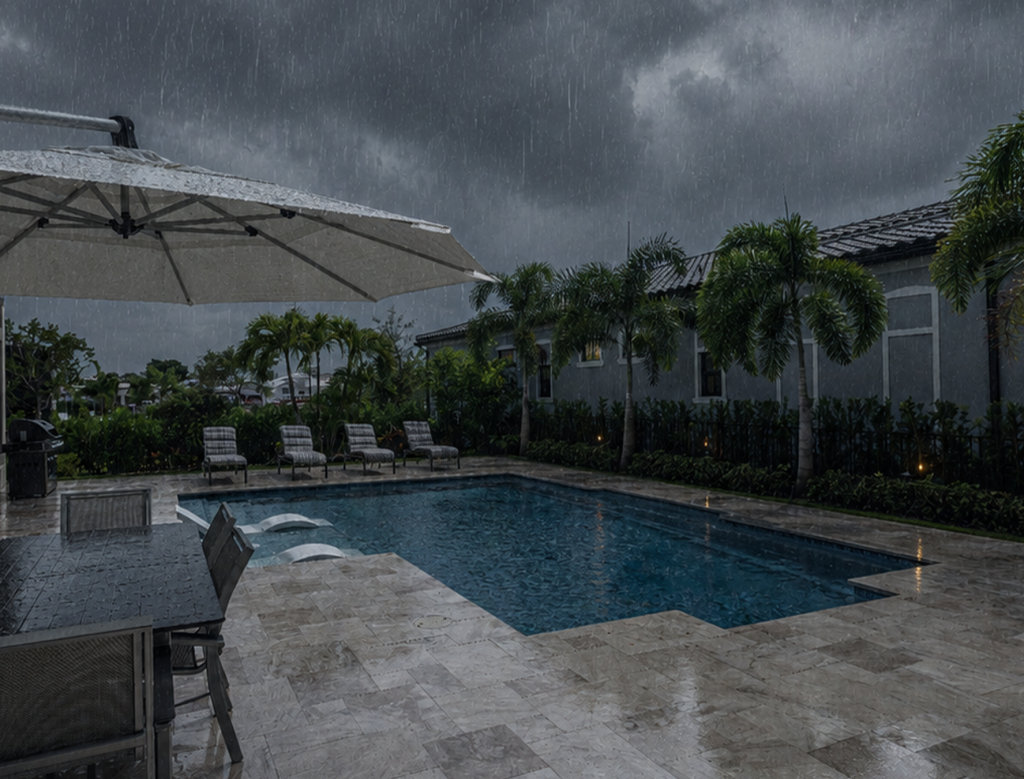
In South Florida, rain is part of everyday life for a large portion of the year. Afternoon storms, constant humidity and prolonged moisture exposure are common, especially during the summer and rainy seasons.
What many homeowners do not realize is that this environment can slowly damage pool decks, pavers and natural stone surfaces over time, even when everything still appears clean on the surface.
For luxury outdoor spaces built with premium materials like marble and high-end pavers, this becomes even more important. Without proper maintenance and protection, moisture can gradually break down surfaces, leading to staining, discoloration, sealer failure and costly restoration.
Understanding how rain affects your pool deck is one of the most important steps in protecting the investment you made in your home.
Why South Florida’s Climate Is So Aggressive on Outdoor Surfaces
South Florida creates the perfect conditions for surface deterioration because of the combination of:
- Heavy rainfall
- High humidity
- Strong UV exposure
- Pool chemicals
- Organic debris and moisture buildup
Together, these factors continuously stress outdoor materials.
Rainwater alone is not necessarily the problem. The issue is what happens when moisture repeatedly penetrates surfaces that are no longer properly protected.
Over time, water absorption weakens sealers, allows contaminants to settle into porous materials and creates an environment where mold, algae and stains can develop much faster.
This process is often gradual, which is why many homeowners do not notice the damage until it becomes more expensive to correct.
How Rain Damages Pool Decks Over Time
Moisture Absorption
When a pool deck loses its protective barrier, the surface begins absorbing water instead of repelling it.
This is especially common with marble, travertine and pavers that have aging or failing sealer.
Once moisture penetrates the surface, it can lead to:
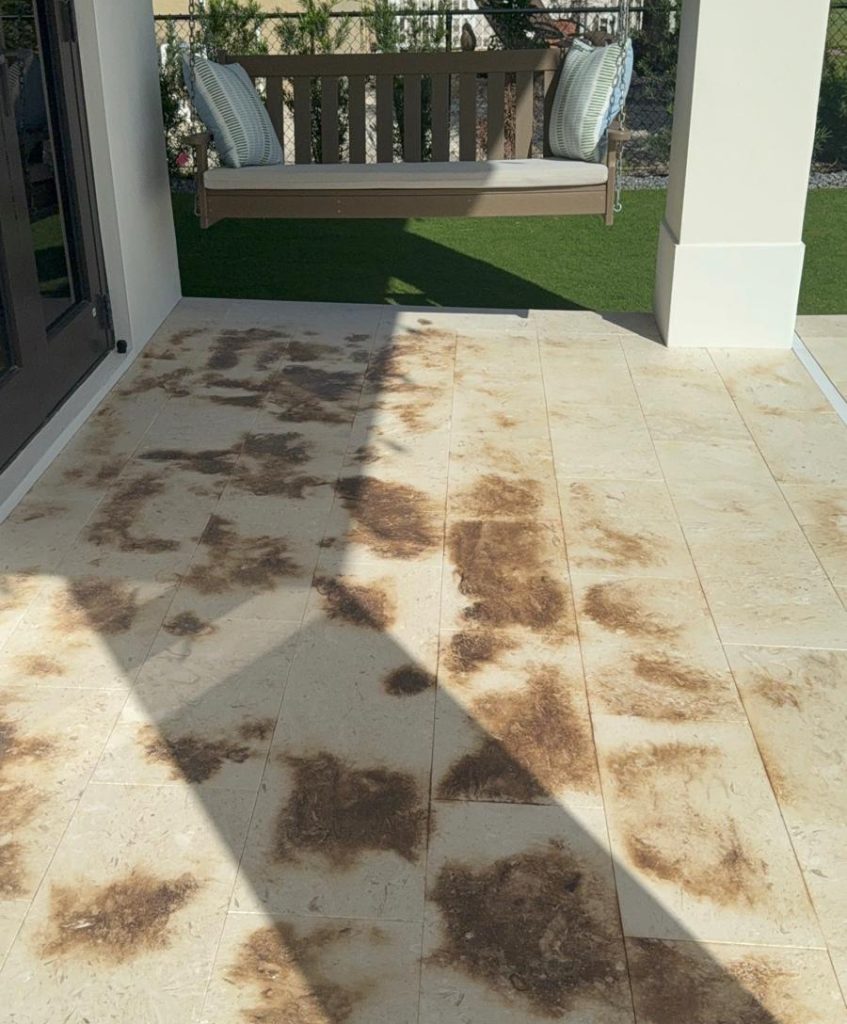
- Dark spots
- Uneven discoloration
- Surface weakening
- Organic buildup
- Premature material deterioration
A properly protected surface should resist water absorption, not hold moisture.
Mold, Algae and Organic Growth
South Florida’s humidity accelerates organic growth on outdoor surfaces.
Rain combined with shade, debris and moisture buildup creates ideal conditions for:
- Mold
- Mildew
- Algae
- Black and green staining
Beyond appearance, these contaminants can make surfaces slippery and more difficult to maintain over time.
This is one reason regular professional maintenance is essential for pool deck longevity.
Sealer Breakdown and Surface Fading
Many homeowners believe sealer lasts forever. It does not.
Constant exposure to rain and UV rays slowly breaks down protective coatings. As the sealer wears off, the surface becomes increasingly vulnerable to moisture, staining and fading.
Some common signs of failing protection include:
- Water no longer beading on the surface
- Uneven color
- Dull appearance
- Increased staining
- Moisture lingering after rain
Once protection is compromised, deterioration accelerates quickly.
Why High-End Pool Decks Require More Maintenance
Luxury pool decks are significant investments.
Materials like marble and premium pavers offer beautiful aesthetics, but they also require proper long-term care to maintain their appearance and integrity.
One of the biggest mistakes homeowners make is assuming that because the deck still “looks fine,” maintenance is unnecessary.
In reality, preventative maintenance is what keeps expensive surfaces from becoming expensive restoration projects.
Once deep staining or deterioration develops, restoration costs increase significantly and replacement materials may be difficult to match.
Maintaining the surface consistently is always more cost effective than repairing major damage later.
The Importance of Professional Pool Deck Maintenance
Professional maintenance is not simply pressure washing a surface.
Proper care involves understanding:
- Surface material type
- Moisture exposure levels
- Sealer condition
- Safe cleaning methods
- Organic contamination
- Long-term protection strategies
Using incorrect methods or low-quality sealers can actually create more damage over time, including cloudy residue, trapped moisture and premature sealer failure.
A professional maintenance approach helps preserve:
- Surface appearance
- Structural integrity
- Slip resistance
- Long-term durability
- Property value
For high-end homes in South Florida, this level of care matters.
How Often Should a Pool Deck Be Maintained in South Florida?
The ideal maintenance schedule depends on factors such as:
- Material type
- Sun exposure
- Rain exposure
- Tree coverage
- Pool usage
- Existing sealer condition
However, most pool decks in South Florida benefit from professional maintenance at least twice per year.
This helps reduce moisture buildup, maintain protection and address small issues before they become larger problems.
Signs Your Pool Deck May Need Maintenance
Homeowners should pay attention to warning signs such as:
- Water absorption
- Dark spots after rain
- Fading color
- Organic staining
- Slippery areas
- White cloudy residue
- Uneven finish
- Surface dullness
These are often indicators that the surface protection is beginning to fail.
Protecting Your Investment Before Damage Appears
A pool deck is more than an exterior surface. It is part of your home’s overall value, appearance and outdoor experience.
South Florida’s climate is harsh on outdoor materials, but consistent professional maintenance helps keep surfaces protected, clean and performing properly year-round.
Waiting until visible damage appears often leads to more expensive restoration and shorter surface lifespan.
Preventive maintenance helps preserve luxury outdoor spaces over the long term.
If your pool deck has not been professionally maintained recently, now is the time to evaluate its condition before rainy season damage becomes more severe.