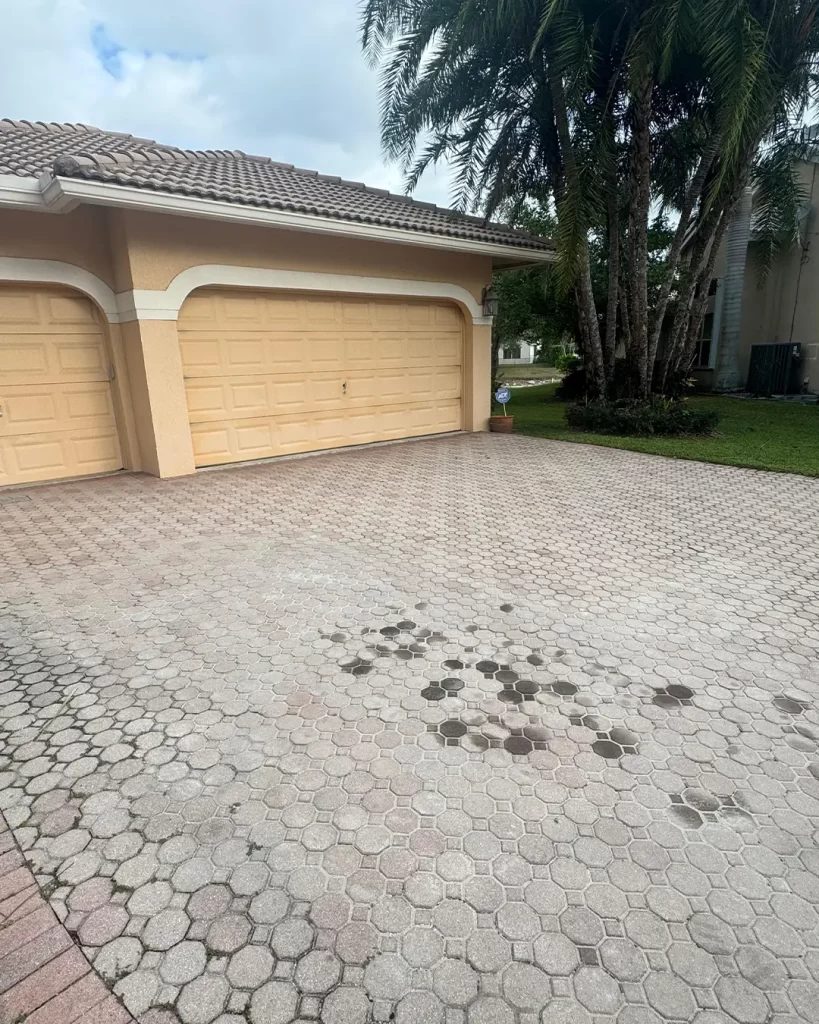
The rainy season is behind us, the air feels lighter, and then you notice it: a white, chalky film spreading across your pavers. It may brush off in places and come right back in others. If that sounds familiar, you may be dealing with efflorescence. Effective efflorescence removal in Lighthouse Point starts with understanding what it is and what it is not.
White on pavers can mean several different things. Treating the wrong cause wastes time and money, and in some cases makes the surface look worse.
What Efflorescence Is
Efflorescence is a white, powdery mineral deposit that appears when moisture moves salts through pavers or masonry. As water travels through the material and evaporates at the surface, it leaves those minerals behind as a visible residue.
It is not ordinary dirt, and it is not mold or mildew. That is why it often reappears after a homeowner rinses or scrubs it away. The source is moisture moving through the material, so the surface keeps receiving new deposits as long as that moisture is present.
Why It Often Shows Up After the Rainy Season
A National Weather Service Miami study of long-term records found that about 69 percent of South Florida’s annual rain falls in a roughly five-month rainy season, which ends on a median date of October 17. That is months of pavers, joints and the base below them taking on water.
When the drier season arrives, with lower humidity and less frequent rain, that stored moisture works its way out. The minerals it carries can be left on the surface as it evaporates. Many homeowners first notice the white residue in late fall for exactly this reason.
Waterfront properties can face added moisture exposure. Homes along canals and near the Intracoastal Waterway deal with humid air, irrigation and water close to the surface. Every property is different, which is why diagnosis matters more than assumptions.
Is It Efflorescence or Something Else?
Several problems can make pavers look white. Before any treatment, it helps to know which one you are seeing.
Efflorescence
Usually powdery and chalky to the touch. It may appear in patches, along joints or near areas that stay damp. It tends to return after rinsing because the moisture source has not changed.
White or cloudy sealer
Looks like a milky haze in or under the sealer coat rather than a loose powder on top. Common causes include moisture trapped under a sealer that is not made for it, the wrong sealer for the surface or conditions, too many coats and poor preparation. The fix is chemical stripping followed by a correct reseal, not another coat. Our page on white and cloudy sealer removal explains that process.
Residue or surface buildup
Construction residue, hard water marks or leftover cleaning products can also leave a light film. These need their own evaluation, and results depend on the residue, the material and prior treatments.
From a distance, these can look almost identical. Up close, with the right experience, they are usually distinguishable. That is the first thing our team checks.
Why Pressure Washing Alone Will Not Solve Efflorescence
It is natural to reach for a pressure washer when something white appears on pavers. With efflorescence, that approach rarely solves the problem. You might move some of the residue around or temporarily reduce it, but if moisture keeps carrying salts to the surface, the deposits come back.
Too much pressure can also create new problems, such as damaging the paver surface or washing out joint sand. Our article on when pressure washing can damage surfaces if done incorrectly covers the risks in more detail.
How Professional Efflorescence Removal Works in Lighthouse Point
Efflorescence needs correct diagnosis and a treatment suited to the surface and the moisture source. There is no single product or process that fits every property, so our approach starts with questions rather than equipment.
- Confirm what the white residue is. We look at texture, location and pattern to tell efflorescence apart from cloudy sealer or other residue.
- Look for the moisture source. We check drainage, downspouts, irrigation patterns and low spots where water tends to sit.
- Choose a treatment suited to the surface. Concrete pavers, natural stone and masonry do not all respond the same way, so the method is matched to the material.
- Clean with the right pressure and technique. Our hot water, high-pressure equipment is adjusted to the surface so we clean without causing damage.
- Plan protection carefully. Sealing can be part of a long-term plan, but only when the surface is ready and the product is right for the conditions. Sealing over active moisture with the wrong product is one of the causes of cloudy sealer.
We never guarantee that efflorescence will not return, because the outcome depends on the moisture source and conditions at your property. What we can do is give you an honest diagnosis and a plan that addresses the cause, not just the symptom. Our surface cleaning and sealing service is where that plan usually begins.
When Efflorescence Points to a Bigger Issue
Sometimes the white residue is a clue to a drainage problem underneath. If water consistently collects in one area, it may also be affecting the base. Pavers sink when downspout water washes out the base, and that kind of problem calls for lifting and resetting pavers and rebuilding or stabilizing the base, not just cleaning.
If you see efflorescence alongside dips or uneven pavers, mention it when you contact us. Our paver repair service covers those situations. You may also find our article on how South Florida rain slowly damages pool decks helpful.
Questions We Ask Before Recommending a Treatment
Every property has its own pattern of water and sun. Before we recommend efflorescence removal in Lighthouse Point, we want to understand how the surface behaves, not just how it looks on the day we visit.
- When did you first notice the white residue? Timing can point to recent rain, new irrigation or a change in drainage.
- Does it come back after rinsing? Residue that returns usually means moisture is still moving through the surface.
- Has the surface been sealed before? Knowing the age and type of any existing sealer helps us tell efflorescence apart from a sealer problem.
- Where does water go when it rains? Downspouts, gutters, irrigation heads and low spots all matter.
- What is the surface made of? Concrete pavers, natural stone and masonry each need a treatment suited to the material.
Your answers, combined with what we see on site, help us recommend a plan that fits your property instead of a one-size-fits-all product.
Keeping Surfaces in Good Shape After Treatment
Once the cause has been addressed and the surface treated, regular care helps you notice changes early. Most residential surfaces benefit from resealing every one to three years, depending on the sealer, sun exposure and traffic, but only after the surface is ready for it. Our maintenance plan provides recurring professional care, so a returning white film can be checked before it spreads.
Signs to Watch For
- White, chalky residue that returns after rinsing.
- Deposits concentrated near downspouts, planters or irrigation heads.
- White lines following the joints between pavers.
- Residue on retaining walls, steps or masonry edges near the pavers.
- Areas that stay damp longer than the rest of the surface.
- Low spots where water pools after rain.
What Not to Do
- Do not apply sealer over efflorescence. Sealing over it can trap the problem and lead to a cloudy finish.
- Do not use strong household acids or unknown products. The wrong chemical can discolor pavers or damage natural stone.
- Do not assume more pressure is better. Pressure should be matched to the surface.
- Do not wait for it to “go away” if it keeps returning. Recurring residue usually means moisture is still moving through the surface.
Schedule Efflorescence Removal in Lighthouse Point
All About Pressure Clean & Seal has more than 21 years of experience in South Florida and is licensed, bonded and insured. We work from our shop in Pompano Beach and serve Broward County and Palm Beach County, including waterfront homes in Lighthouse Point.
Call 754-219-1605 or Get an Estimate online. We will identify what the white residue is and recommend a treatment that fits your surface and its moisture source.
Frequently Asked Questions
What causes white powder on pavers?
One common cause is efflorescence, a white, powdery mineral deposit that appears when moisture moves salts through pavers or masonry. White on pavers can also come from cloudy sealer or other residue. A correct diagnosis comes first, because each cause needs a different solution.
Will pressure washing remove efflorescence?
Pressure washing alone will not solve efflorescence. It may move or reduce some of the residue, but if moisture keeps carrying salts to the surface, the deposits return. It needs a treatment suited to the surface and the moisture source.
Is efflorescence the same as white, cloudy sealer?
No. Efflorescence is usually a loose, chalky deposit on the surface, while cloudy sealer is a milky haze in or under the sealer coat. Cloudy sealer requires chemical stripping and a correct reseal, which is a different process.
Can I seal my pavers to stop efflorescence?
Sealing over active efflorescence with the wrong product can trap moisture and lead to a cloudy finish. Sealing may be part of a long-term plan, but only after diagnosis, treatment and confirmation that the surface and product are right for the conditions.
Will efflorescence come back after treatment?
It can, depending on the moisture source and conditions at the property. We do not guarantee it will never return. Addressing drainage or water flow where possible gives the treatment a better chance of lasting.