Many homeowners plan a reseal the same way: pressure wash the pavers, let them dry and roll on a fresh coat. When the old sealer is still in good shape, that thinking is close to right. When it is cloudy, peeling or failing, it is not.
If you need to remove old paver sealer in Weston before resealing, the most important thing to know is that pressure washing will not do it.
This article explains the difference between cleaning and stripping, how to tell which one your pavers need and why getting this step right decides how your new sealer performs.
Cleaning and Stripping Are Two Different Services
Pressure washing and chemical stripping are often confused, but they solve different problems.
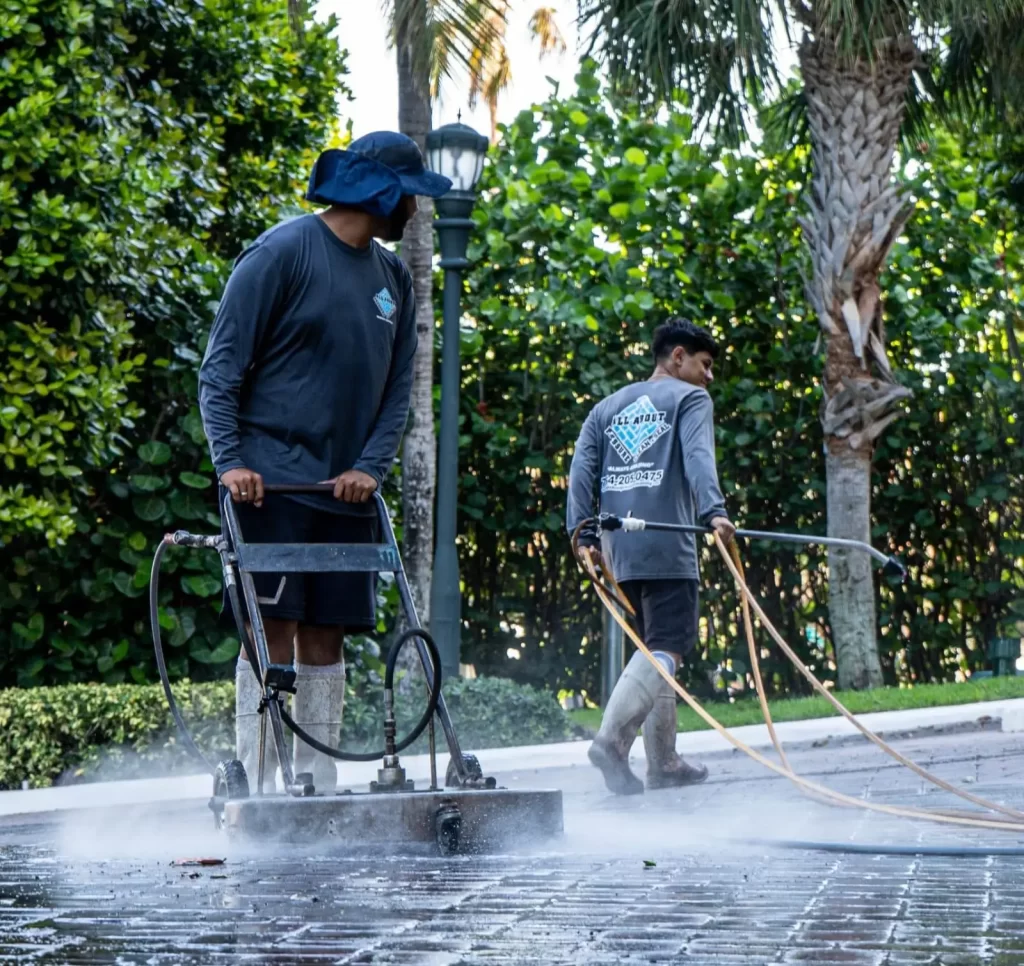
- Pressure washing removes surface dirt and organic buildup, such as mold, mildew, algae and everyday grime. We use hot water, high-pressure equipment, with the pressure and technique matched to each surface.
- Chemical stripping removes sealer that has bonded to the surface. Old, cloudy, peeling, failing or incompatible sealer requires this separate, more specialized process.
A pressure washer can make sealed pavers look cleaner. It cannot take off a sealer that has bonded to the pavers, no matter how hard it is pushed.
Why More Pressure Is Not the Answer
When a pressure wash does not clear a cloudy or patchy sealer, the temptation is to turn up the pressure or hold the tip closer. That approach puts the surface at risk without solving the problem. Excess pressure can damage pavers, joints and surrounding surfaces while the failed sealer stays in place.
We cover this risk in our article on when pressure washing can damage surfaces if done incorrectly. Pressure washing is a valuable service, and our pressure washing service is the right call for many surfaces. It is simply not a sealer removal method.
What Happens When New Sealer Goes Over Old Sealer
A new sealer is only as good as the surface beneath it. When it is applied over a coating that is cloudy, peeling or incompatible, it inherits every problem of the layer underneath.
- Cloudy sealer stays cloudy. A fresh coat seals the haze in rather than clearing it.
- Peeling continues. If the old layer is losing its bond, the new layer on top of it can peel with it.
- Coats stack up. Too many coats is one of the common causes of white, cloudy sealer in the first place.
- Products may not be compatible. Without knowing what was used before, a new product may not bond or perform as intended.
Clean is not the same as protected, and coated is not the same as properly sealed. Proper preparation is the foundation of lasting results.
Signs You Need to Remove Old Paver Sealer
Not every resealing project needs a strip. Here are the signs that point toward stripping before resealing:
- A white, milky or foggy haze in the sealer
- Sealer that is peeling, flaking or lifting, especially in high-traffic areas
- Patchy sheen, where some areas look glossy and others look bare
- A surface that has been recoated several times over the years
- No record of what sealer was used before
- Haze or discoloration that remains after a thorough cleaning
If your pavers show none of these signs and the existing sealer is in good condition, a proper cleaning and reseal may be all you need. An evaluation tells you which path fits your surface.
Questions to Ask Before Anyone Reseals Your Pavers
Whether you hire us or another company, a few questions help you understand whether the job will be done right. A contractor who plans to remove old paver sealer in Weston should be able to answer them clearly:
- What is on the surface now? A good evaluation looks at the existing sealer before recommending anything.
- Will you clean, strip or both? The answer should match the condition of the coating, not a standard package.
- How will old sealer be removed? If the answer is “we pressure wash it off,” that is a red flag. Bonded sealer requires chemical stripping.
- What sealer goes on next, and why? The product should be chosen for the surface and for South Florida conditions.
- How long before we can walk and drive on it? Cure times depend on the product, temperature and humidity, and you should get a clear window for your project.
Our article on how choosing the right company protects your investment goes deeper into what to look for.
Why Sealer Turns White and Cloudy
When we strip a cloudy sealer, the cause usually traces back to one or more of these:
- Moisture trapped under a sealer that is not made for it
- The wrong sealer for the surface or the conditions
- Too many coats
- Poor preparation before the sealer went down
The fix is the same in each case: a chemical strip, then a correct reseal, not another coat.
How We Remove Old Paver Sealer in Weston
Each surface is evaluated first, because pavers, natural stone and existing sealers do not all behave the same way. We choose the stripping approach and the reseal for your specific surface rather than applying one process everywhere.
- Evaluate the surface and existing sealer. We check how the coating is failing, how much of the surface is affected and whether there are other issues to address.
- Chemically strip the failed sealer. A stripping process suited to the surface breaks down the bonded coating so it can be removed.
- Clean and rinse thoroughly. Residue, dirt and organic buildup are removed so the new sealer bonds to the surface itself.
- Prepare problem areas. Issues found during the evaluation are addressed before sealing begins.
- Apply a correct reseal. The surface is sealed with a product chosen for the material and for South Florida conditions.
Learn more on our sealer stripping and white cloudy sealer removal page.
Choosing the Sealer That Goes on Next
Once old sealer is removed, the choice of new sealer matters just as much as the strip. We use a premium two-part urethane sealer that can be applied on dry or damp surfaces, which suits a climate where pavers rarely stay completely dry. We rarely use and do not recommend solvent-based (xylene) sealers.
We guarantee that our sealer will not turn white and cloudy, under a limited warranty, and to our knowledge we are the only company in Florida offering that guarantee. In the right application, a quality sealer can reduce water absorption by up to 95 percent.
If your pavers have faded or look uneven after years of sun, a pigmented sealer may be worth discussing. It is UV-stable and helps protect and even out color. You can read about it on our pigmented sealer page.
What Weston Homeowners Should Plan For
Weston is known for its gated communities and carefully kept homes and landscaping. Driveways, entries and pool decks here are part of a home’s overall presentation, and many homeowners have resealed more than once over the years. That history is exactly why an evaluation matters before the next coat goes down.
The drier season, after the rainy season ends on a median date of October 17 according to a National Weather Service Miami study, brings lower humidity and less frequent rain. It is a practical window for stripping and resealing. See how we serve the area on our Weston service page.
After the Reseal: Keeping It That Way
Most residential surfaces benefit from resealing every one to three years, depending on the sealer, sun exposure and traffic. Keeping to a schedule helps avoid the cycle of failed coats and repeated stripping.
Our maintenance plan provides recurring professional care, so your surfaces are checked and maintained before small issues turn into a full restoration.
Schedule Old Sealer Removal in Weston
If you are planning to reseal and are not sure what is on your pavers now, start with an evaluation. All About Pressure Clean & Seal has more than 21 years of experience in South Florida, is licensed, bonded and insured, and serves Broward County and Palm Beach County from our shop in Pompano Beach.
Call us at 754-219-1605 or Get an Estimate online. We will tell you whether your surface needs a cleaning, a strip or both before any work begins.
Frequently Asked Questions
Can pressure washing remove old paver sealer?
No. Pressure washing removes surface dirt and organic buildup, but it does not remove sealer that has bonded to the surface. Old, cloudy, peeling or failing sealer requires chemical stripping, which is a separate, more specialized process.
Do I always need to strip before resealing?
Not always. If the existing sealer is in good condition and compatible, a proper cleaning and reseal may be enough. If it is cloudy, peeling, patchy or unknown, stripping first is usually the right step.
What happens if I seal over cloudy or peeling sealer?
The new coat inherits the problems underneath. Cloudy sealer stays cloudy, peeling can continue and the extra coats add to the buildup that often causes clouding in the first place.
Will my new sealer turn white after the strip?
We use a premium two-part urethane sealer that can be applied on dry or damp surfaces, and we guarantee it will not turn white and cloudy under a limited warranty. Ask our team about the warranty terms for your project.
How often should pavers be resealed?
Most residential surfaces benefit from resealing every one to three years, depending on the sealer, sun exposure and traffic. Our maintenance plan helps keep that schedule on track.