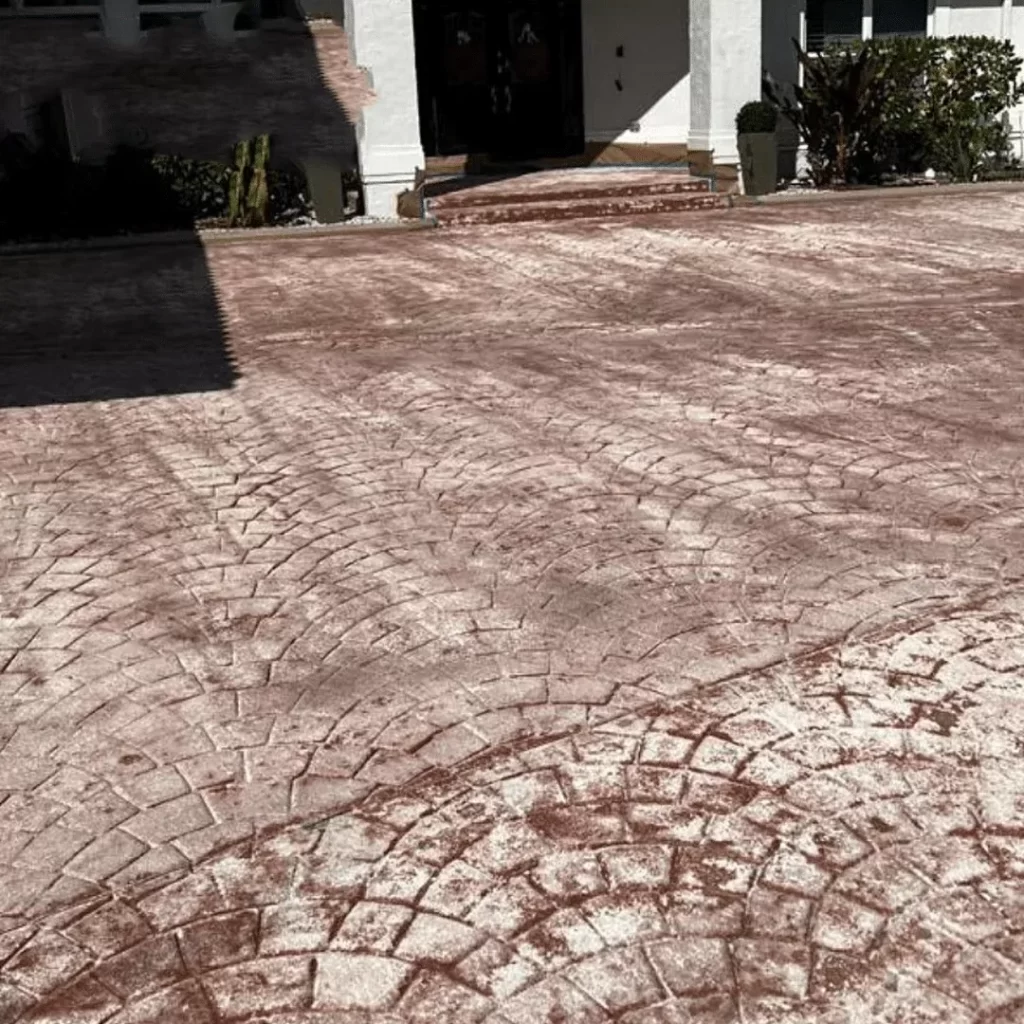
If your pavers looked rich and even in the spring and now show a milky white haze, cloudy patches or a dull film that will not rinse off, the problem is usually not dirt. It is the sealer. After a long, wet South Florida summer, understanding white cloudy sealer removal in Fort Lauderdale can save you from the most common mistake homeowners make: calling someone to “just reseal” the driveway or pool deck.
The good news is that cloudy sealer has known causes and a correct fix. The bad news is that the usual quick fixes, another coat or a harder pressure wash, do not solve it. Here is what is happening on your pavers and what a proper restoration looks like.
What White, Cloudy Sealer Really Means
A sealer is meant to form a clear, protective layer on and in the surface. When it turns white or cloudy, that layer itself has changed. Moisture, the wrong product or poor application has left the coating hazy, and in many cases the haze is inside the sealer rather than sitting on top of it.
That distinction matters. Surface dirt can be cleaned away. A sealer that has clouded from within has to come off before the pavers can look right again.
Why Summer Rain Brings the Problem Out
South Florida’s rainy season is long and heavy. A National Weather Service Miami study of Miami International Airport records from 1956 to 1997 found that about 69 percent of annual rain falls in a season of roughly five months, and that the season ends on a median date of October 17. You can read the details on the National Weather Service summer season page.
For a paver surface, that means months of repeated soaking, high humidity and short drying windows. If the sealer on top was not made to handle moisture, the water has nowhere to go. It often shows up as white clouding once the weather finally dries out.
That is why many homeowners notice the problem in the fall. The rain eases, the sun returns and the haze that formed during the summer becomes impossible to ignore.
The Most Common Causes of White, Cloudy Sealer
Across more than 21 years of working on South Florida surfaces, we see cloudy sealer trace back to the same short list of causes, often more than one at a time:
- Trapped moisture. Moisture gets caught under a sealer that is not made for it. The sealer locks the water in, and the coating turns hazy.
- The wrong sealer for the surface or the conditions. Not every sealer suits every paver, stone or climate. A product that performs well in a dry region may struggle in ours.
- Too many coats. Stacking coat after coat builds a thick film that can cloud and lose its bond with the surface.
- Poor preparation. Sealer applied over dirt, residue or a failing older coating has a weak foundation from the first day.
Why Another Coat Will Not Fix It
The most common instinct is to add a fresh coat and hope it clears the haze. In most cases it does the opposite. A new coat seals the cloudy layer underneath and adds thickness, and too many coats is one of the causes of clouding in the first place.
The correct fix is to chemically strip the failed sealer, prepare the surface properly and then apply a correct reseal. Skipping the strip tends to bring the same white haze back.
Why Pressure Washing Is Not the Answer Either
Pressure washing is a valuable service. It removes surface dirt and organic buildup, and we use hot water, high-pressure equipment with the pressure and technique matched to each surface. What pressure washing does not do is remove sealer that has bonded to the pavers.
Trying to blast off a failed coating with more pressure can damage the surface without solving the problem. We cover that risk in our article on when pressure washing can damage surfaces if done incorrectly.
Old, cloudy, peeling, failing or incompatible sealer requires chemical stripping. It is a separate service, and a more specialized one.
How White Cloudy Sealer Removal in Fort Lauderdale Works
Every surface is evaluated first, because the right approach depends on the paver or stone, the existing sealer and the condition underneath. Not every surface gets the same product or process. A typical restoration follows these steps:
- Evaluation. We look at the extent of the clouding, how the existing sealer is behaving and whether there are other issues, such as sunken areas, stains or white mineral deposits.
- Chemical stripping. A stripping process suited to the surface breaks down the failed sealer so it can be removed.
- Cleaning and rinsing. The surface is thoroughly cleaned to remove residue, dirt and organic buildup.
- Preparation. Any problem areas found during the evaluation are addressed before sealing. Proper preparation is the foundation of lasting results.
- Correct reseal. The surface is sealed with a product chosen for the material and for South Florida conditions.
You can learn more about this process on our sealer stripping and cloudy sealer removal page.
Resealing With a Sealer Made for Florida Moisture
We use a premium two-part urethane sealer. It can be applied on dry or damp surfaces, which matters in a climate where pavers rarely stay perfectly dry for long. We rarely use and do not recommend solvent-based (xylene) sealers.
We stand behind that choice. We guarantee that our sealer will not turn white and cloudy, under a limited warranty, and to our knowledge we are the only company in Florida offering that guarantee.
In the right application, a quality sealer can reduce water absorption by up to 95 percent. Less water moving into the surface means better protection against the yearly cycle of rain, humidity and sun.
What Fort Lauderdale Homes Are Up Against
Fort Lauderdale is a city of canals, waterfront homes and properties close to the Intracoastal Waterway and the ocean. Outdoor surfaces here live with humidity, frequent rain during the wet season and strong sun the rest of the year. Driveways, entries and pool decks are the first thing guests see, and on waterfront homes they are part of how the property is enjoyed every day.
That combination is why sealer choice and preparation matter so much locally. A product that tolerates moisture, applied over a properly prepared surface, gives you the best chance of lasting results. See how we serve the area on our Fort Lauderdale service page.
Signs Your Sealer Needs Professional Attention
- A white, milky or foggy haze across the surface
- Cloudy spots or patches that look lighter than the rest of the pavers
- Sealer that is peeling, flaking or lifting
- An uneven sheen, with some areas glossy and others dull
- Haze that is still there after a thorough cleaning
- No record of what product was used before, or a surface that has been recoated several times
If you see any of these signs, hold off on adding another coat until the surface has been evaluated. A professional look is the fastest way to a clear answer.
Why Fall Is a Smart Time to Fix It
Once the rainy season winds down, the drier season brings lower humidity and less frequent rain. That gives more predictable conditions for stripping, cleaning and resealing. It also lets you see the true condition of your sealer after the summer has tested it.
The Atlantic hurricane season officially runs through November 30, so it is still wise to schedule with some flexibility. If your sealer is in good condition and simply due, our paver cleaning and sealing service may be all you need.
After restoration, most residential surfaces benefit from resealing every one to three years, depending on the sealer, sun exposure and traffic. Our maintenance plan keeps that care on a regular schedule so small problems are caught early.
Schedule White Cloudy Sealer Removal in Fort Lauderdale
If your pavers turned white after this summer’s rain, the fix starts with the right diagnosis. Our team is licensed, bonded and insured, works from our shop in Pompano Beach and serves homeowners throughout Broward County and Palm Beach County.
Call us at 754-219-1605 or Get an Estimate online. We will evaluate your surface and explain what it needs before any work begins.
Frequently Asked Questions
Why did my paver sealer turn white?
The most common causes are moisture trapped under a sealer that is not made for it, the wrong sealer for the surface or conditions, too many coats and poor preparation. After a long rainy season, trapped moisture is often what makes the haze visible.
Can I apply another coat of sealer over the cloudy areas?
We do not recommend it. Another coat seals the cloudy layer in and adds thickness, which can make the problem worse. The correct fix is a chemical strip followed by a correct reseal.
Will pressure washing remove white, cloudy sealer?
No. Pressure washing removes surface dirt and organic buildup, but it does not remove sealer that has bonded to the surface. Failed sealer requires chemical stripping, which is a separate, more specialized process.
Will my new sealer turn white again?
We use a premium two-part urethane sealer that can be applied on dry or damp surfaces. We guarantee it will not turn white and cloudy, under a limited warranty. Ask our team about the warranty terms for your project.
How often should pavers be resealed after restoration?
Most residential surfaces benefit from resealing every one to three years, depending on the sealer, sun exposure and traffic. Our maintenance plan can keep that schedule on track for you.